Sunday, August 12, 2018


An Underrated Move For Chest

Want a 3D Chest That Pops? Try This Exercise

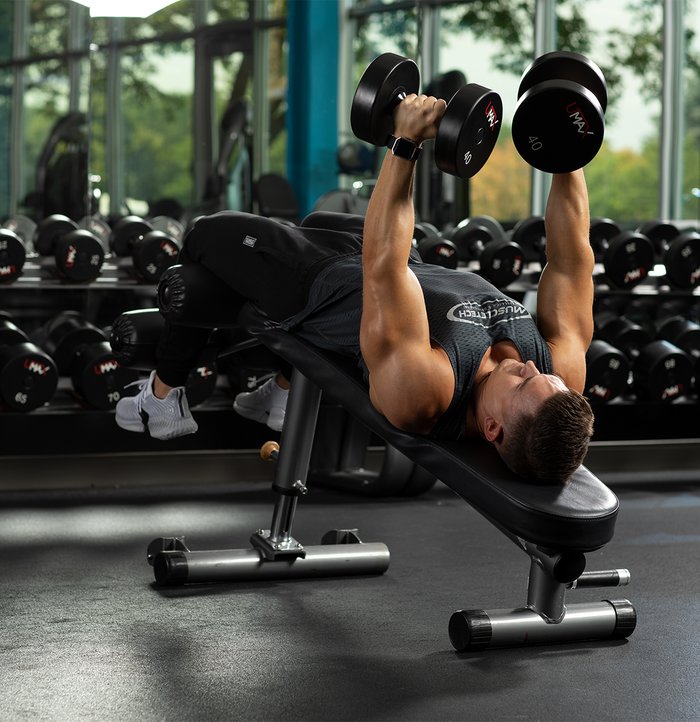
No, it isn't a fancy new movement. It's the decline dumbbell fly. 


Incline movements dominate most chest workouts, and a lot of attention is paid to building the upper chest. Finish up with a few sets on the flat bench and you're good to go, right? Not so fast. You're neglecting one area that is paramount for optimal pec development—the lower pecs.
Many lifters out there don't do enough to work their lower pecs. Fortunately, there's an exercise you can do to target this area and improve your entire chest workout when done first: the decline dumbbell fly.

An Underrated Move For Chest

The decline bench isn't as popular as its incline and flat counterparts. You rarely see it used in today's gyms, and those select few who do use it likely only do so because they can move heavier weight.
But if you're more concerned with building your pecs than building your ego, adding decline flyes to your plan will help you build muscle, maximize function, and even improve your chest exercises.
Working the lower pecs can also help you improve the separation of the pecs from the abdomen—a rarely mentioned feature that can make your pecs pop like crazy. If you compete in bodybuilding shows, or if you just want that classic Arnold physique, this separation is essential for success.

Proper Form For Decline

You can check out how to perform this movement at the Bodybuilding.com Exercise Database. Here are a few extra tips to help you get the most out of this exercise for optimal chest growth.
Ideally, the decline bench should allow you to control the angle. A 30-degree decline will serve you best on this exercise, but you can go up to 45 degrees.
Many lifters typically use more weight for pressing at a decline angle, but avoid this practice on your flyes. If you're using 100-pound dumbbells, then you're missing the point. The primary goal of this chest-builder is to stretch the pecs at the bottom of the move and achieve a quality contraction at the top.
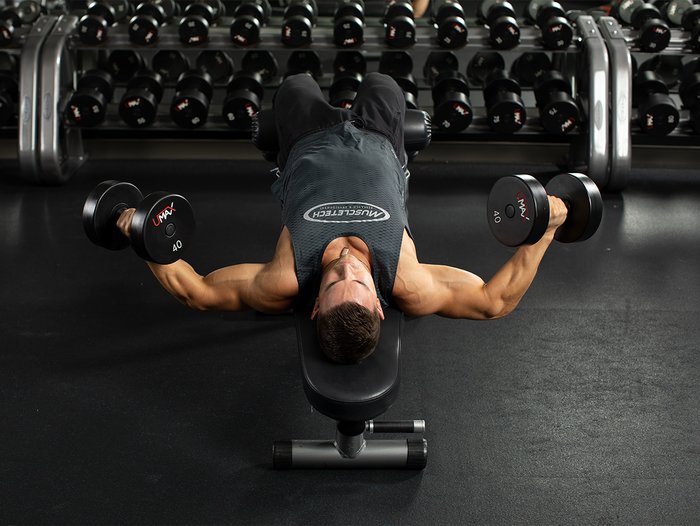
Proper Form For Decline
Once you've selected the appropriate weight and gotten into position, try to get as much of a stretch as you can—safely—every time you lower the weights. There's no need to touch the floor, but don't shortchange the range of motion, either. Bonus tip: As you go down to the bottom of the rep, turn your hands so that your pinkies face out. This will help you achieve even more of a stretch in your pecs.
Once you feel that deep stretch you're looking for, it's time to lift the dumbbells back up. As you do, remember to keep the weights over the pecs. It's tempting to lift them up over your head so you can see them, but this recruits the shoulders and takes tension off the pecs. Once the dumbbells are over your chest, turn the dumbbells slightly inward to achieve a little more flex at the top.
Do this exercise at the start of your workout for 3-4 sets of 10-15 reps. This isolation move is a great warm-up to pump blood into the area and pre-exhaust your pecs before the heavier lifting begins.

Sunday, June 3, 2018

FAT-BURNING CHICKEN SALAD

If you love chicken salad, you know there’s one ingredient you must AVOID if you’re on a weight loss plan…

MAYONNAISE
This ingredient is killer for your waistline and your overall health. And the “low fat” or “no fat” options for mayonnaise are also a no-go.
So you’ll be happy to know that I created a fat-burning chicken salad recipe that is absolutely delicious! Give it a try and I promise you’ll never use mayonnaise again.

Fat-Burning Chicken Salad

INGREDIENTS

6 oz. cubed chicken breast
1 c. plain greek yogurt (I love Fage)
1/2 c. sliced celery
1/2 c. small cubed apple pieces
1/4 c. sliced, small cubed onion
2 tbsp. raisins or craisins (optional)
2 tsp. cumin spice
salt and pepper to taste

DIRECTIONS

Mix all together and it’s ready to eat.
This is fast, easy to make and so yummy! You can top it on a bed of greens or eat it plain.
Want more deliciously simple and fat-burning recipes like this? Click Next Page below to see over 150 of my most popular fat-burning recipes that you can make in 15 minutes or less.
Leave your comments below and let me know what you think about this recipe.
Much love,
WHY THE SUGAR SCALE (HYPOGLYCEMIC INDEX) MATTERS


Most foods have some carbohydrates (sugar), except for fats and oils.
Depending on the type of sugar in the food your blood sugar will spike immediately or raise at a slower pace.
This is where the glycemic index (sugar scale) comes in handy.
What is the Glycemic index?

Glycemic index or GI tells you how fast or slow a food raises your blood sugar after eating it.
Foods get their ranking based on how they compare to a reference food. The reference food used is glucose or white bread.
A food with a high GI raises blood glucose more than a food with a medium or low GI.
A carbohydrate-rich food is ranked based on its glycemic index score as follows:
It is best to eat foods that have low or medium GI foods for health. This helps in sustained weight loss as well as maintain stable blood sugar levels.
What happens if you choose foods high on the glycemic index? 3 Things
1. Sugar ”highs” & ”dips”:
Your blood sugar tends to spike within a short span of eating the food giving you a sugar ”high”. This is immediately followed by a sugar crash.
2. Hunger:
You will feel hungry often, which can lead to frequent food intake. This leads to weight gain.
3. Increased risk of diseases:
Eating foods with a high glycemic index increases the risk of diseases. Some common diseases include certain types of cancers, diabetes, heart diseases etc .
But don’t be alarmed, with some awareness and planning you can maneuver your way to stable blood sugar. Here are some tips to keep your blood sugar stable.
3 Tips to choose low GI foods that stabilize blood sugar
1. Plan your meals:
Combine high carbohydrate meals with protein-rich foods. Presence of protein can slow down digestion of carbs. This results in slower release of sugar into the blood stream.
2. Choose fiber:
Choose foods with high dietary fiber such foods have a low or moderate glycemic index.
Some examples include:
Dried beans and legumes (like kidney beans and lentils)
All non-starchy vegetables
Some starchy vegetables like sweet potatoes, most fruit
3. Include non-carb foods:
Meats and fats don’t have a GI because they do not contain carbohydrates.
The Glycemic index is useful for diabetes patients and for those trying to lose weight. It is also a useful tool to eat healthy.
But not all foods with low glycemic index are healthy.
For example, a bar of milk chocolate may have a glycemic index of 49. This is a low score for GI, but it delivers little when it comes to nutrients.
Be mindful, choose foods that deliver the most nutrition. Use this plan along with the GI to avoid confusion.
Yours in Health,

Most Powerfull

  How to get rid of muscle cramps in your legs     The muscles in your legs are made up of bundles of fibers that alternately contract and ...