Sunday, August 12, 2018

5 Signature Moves for a Crowded Gym

By learning these five variations on exercise mainstays, you'll stimulate your muscles in new ways and have more choices when there's lots of competition for equipment. 


Necessity, they say, is the mother of invention. For Bodybuilding.com Signature athlete Julian Smith, that was definitely the case. As Smith explained in The Bodybuilding.com Podcast, he was frustrated as a young lifter by training at busy gyms where everyone seemed to be doing the same thing, at the same time. This led him to start looking for innovative alternatives, often using old-school bodybuilders as his guide.
Today, Smith is known for sharing all kinds of unique movements on social media, in articles like "Julian Smith's Signature Moves for Legs," and in his Bodybuilding.com All Access program 30 Days to Your Best Arms. But he's not just changing things for the sake of changing things; on the contrary, he finds that it dials in his technique and increases the mind-muscle connection.
"When something is new and exciting, when you've never done it before, you're going to put a little more focus on your technique to make sure you're doing it the right way," Smith says.
Here are five twists on some old standby exercises that will keep your mind and gains fresh, while also helping you make the most of the limited equipment available in a busy weight room.

1. Heels-Elevated Dumbbell Goblet Squat

When there are lots of people in the weight room, the squat racks can be the first place to fill up. You have a choice: sit and wait, or look for alternatives.
So, what makes his version of the goblet squat a worthy alternative to the almighty barbell front squat?
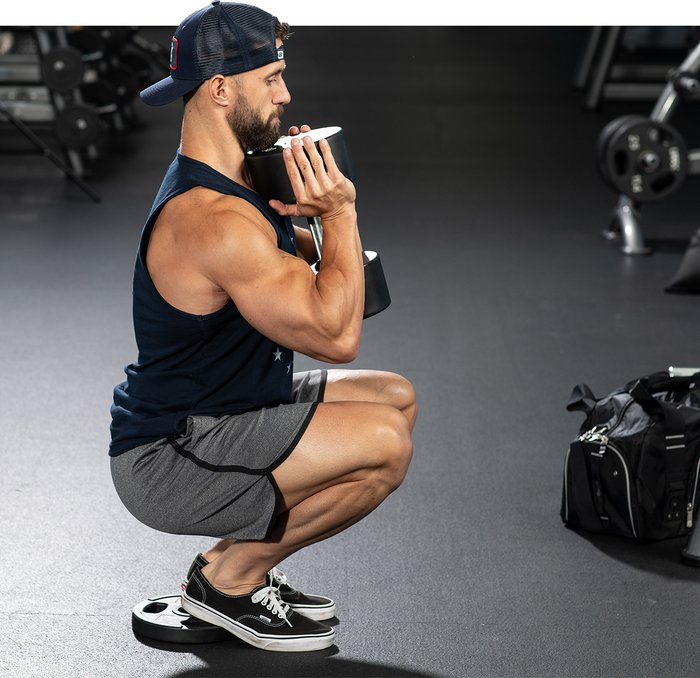
Heels-Elevated Dumbbell Goblet Squat
"A lot of people who do front barbell squats have a hard time stimulating their quad muscles," Smith says. "They tend to support the weight on shoulder muscles that are a lot smaller than their quads, so it limits how much weight they can handle."
Smith addresses that situation by swapping out the barbell for a dumbbell, and upping the reps to where few people brave to go with barbell front squats.
What's more, he recommends performing this squat variation with your heels—and only your heels—touching, and elevated about the width of a plate. Point your knees out as you would in a normal squat stance. Keep the weight pressed against your chest, keep the lowering half of the rep slow, and you'll definitely feel it in your quads.
"This variation is basically a front squat because this also keeps the weight centered close to your body as it would be if you were doing a normal front barbell squat," Smith explains.
Sets and reps: 4 sets of 20, 15, 10, 10 reps

2. Good Morning Into a Squat

Good mornings and squats are both great exercises on their own. So why do them together? For one, it'll help you hit every part of your legs without having to use a heavy weight. You'll feel your hams and glutes getting stretched to the max on the good morning, and then they and your quads will power you through the squats. It'll also allow you to maximize the precious time you have in the squat rack, if you were planning on doing squats first and then a hamstring-focused movement like RDLs or stiff-legged deads afterward.
A good morning is very difficult to do with a lot of weight on the bar, so you want to use 20-25 percent of your normal squat weight. You may be able to squat 315 pounds for 8 reps, but you're not going to be able to carry that much in a good morning.
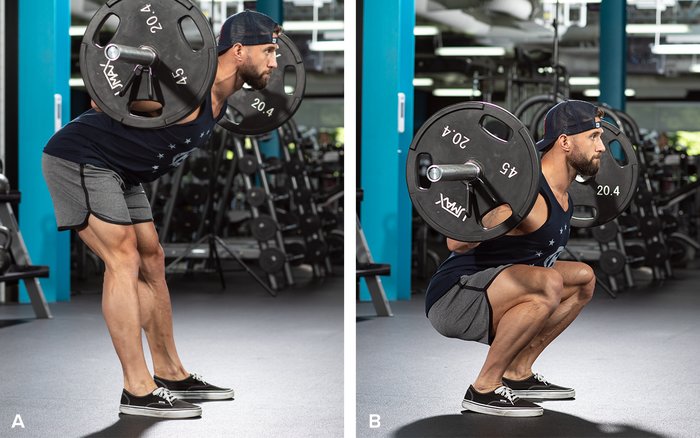
Good Morning Into a Squat
To be clear, you're not doing a full rep of a good morning followed by a full rep of a squat. You'll bend forward into the good morning, then drop your butt down into the bottom of a squat. For your back's sake, you'll definitely want to position your feet wider than you would for a good morning.
Sets and reps: 4 sets of 12, 10, 8, 8 reps

3. Seated Cable Row Wide-Grip Lat Pull-down

If you're working out in a crowded gym and the lat pull-down machines are taken, your back day doesn't have to come to a grinding halt. Just find an open seated cable row machine and do your pull-downs while lying facedown on the cable row bench.
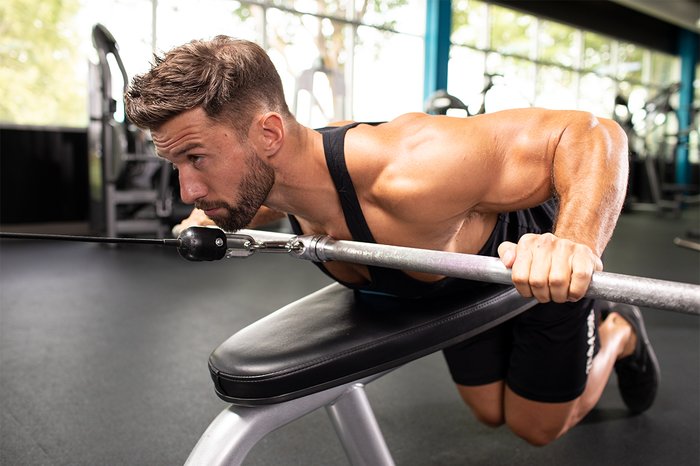
Seated Cable Row Wide-Grip Lat Pull-down
"What I like more than anything about this variation," Smith says, "is that since you're lying down on your stomach and your chest is flat on the pad, you can take a lot of the torso momentum out of this movement, which helps you give your lats a better workout."
Sets and reps: 4 sets of 10 reps

4. Bodyweight Leg Extension

This is another perfect variation for a day at the gym when everyone seems to be on the same split as you.
"Bodyweight leg extensions are basically the exact same movement as a leg extension," Smith says, "but you can do them without a leg extension machine just by using the floor and your body weight."
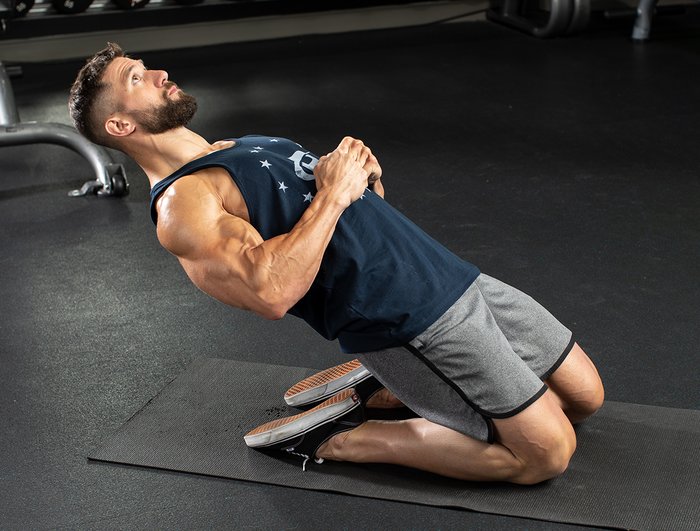
Bodyweight Leg Extension
Kneel on the floor with your legs straight out behind you and your upper body erect. Keeping your back straight, lean back, lowering your butt down to your heels, then bring yourself back up again. That's it. But, like anyone who has tried Smith's popular take on the sissy squat can attest, your quads will burn like a raging inferno for days afterward.
Sets and reps: 4 sets to failure

5. Wrestler's Bridge

Wrestling bridges used to be a staple of strength training, but you don't see them much anymore. But if you're simply doing shrugs in the hopes that it'll give you that "strong like a bull" look, this may be just what you need. (Keep doing those shrugs too, though.)
"A lot of people think this is a pretty barbaric exercise, but it's an old-school move," says Smith. "Not a lot of people want to lie on their back and lift their entire torso off the ground by their head and neck support, but it's actually a very safe exercise. A lot of people do it for wrestling and MMA-style training."
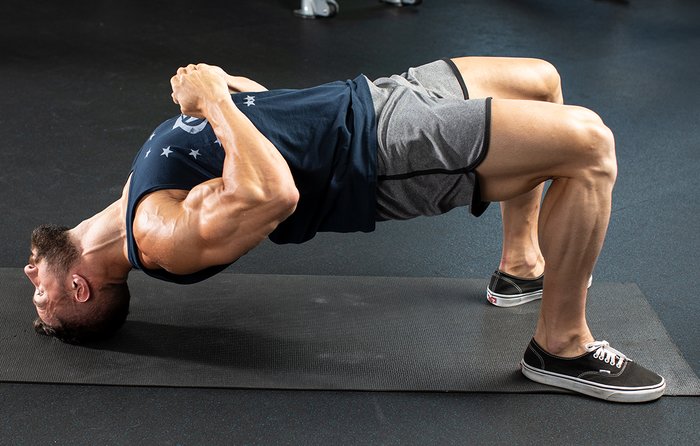
Wrestlers Bridge
The best part? All you need is a bit of floor space and a towel or pad for your head. Train these along with shoulders and traps, and get ready to stretch that neck hole.
Sets and reps: 4 sets to failure

3 Protein Pops To Keep You Cool In The Heat

Summer heat getting to you? Chill out with these frosty popsicles that play by the nutritional rules. 


Call it part cooling effect, part nostalgia. Who doesn't love a cold popsicle when temperatures are soaring? But deep down you're probably wishing there was a way to beat the heat other than the too-sweet concoctions you get from the grocery store freezer case.
Don't sweat it. Popsicles can be so much more than a frozen sugar bomb. To give pops a fitness-friendly makeover, break out the blender and popsicle molds to make your own.
These sophisticated sub-zero heroes aren't just delish treats on a hot summer day, they're also health food on a stick. Getting your protein has never been so cool.

1. Mocha Pops

It's time to take your java out of the mug and into a popsicle mold. Naturally sweetened with dates, these ice pops taste like a fancy coffee drink but with way more nutritional credibility.
Mocha Pops
View Recipe Here

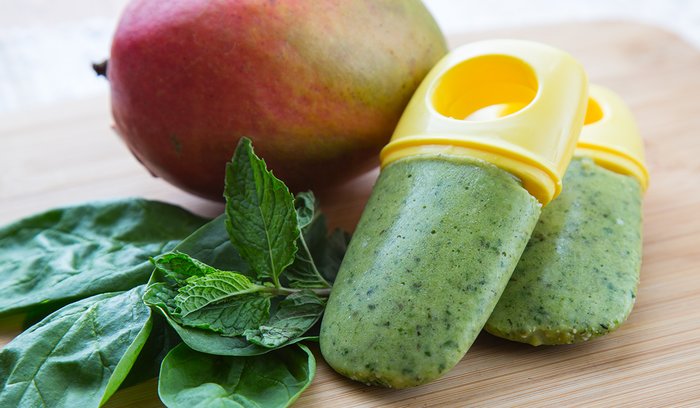
2. Green Mango Pops

You'll be hard pressed to find frosty pops with more nutritional heft than these. Hemp seeds add a dose of plant-based protein and essential omega fats, while the mild-tasting baby spinach adds a dose of antioxidants. Use a plant-based protein powder if you want to keep these pops vegan or dairy free. Pineapple could also stand in for mango, and the mint can be replaced with fresh basil.
Green Mango Pops
View Recipe Here

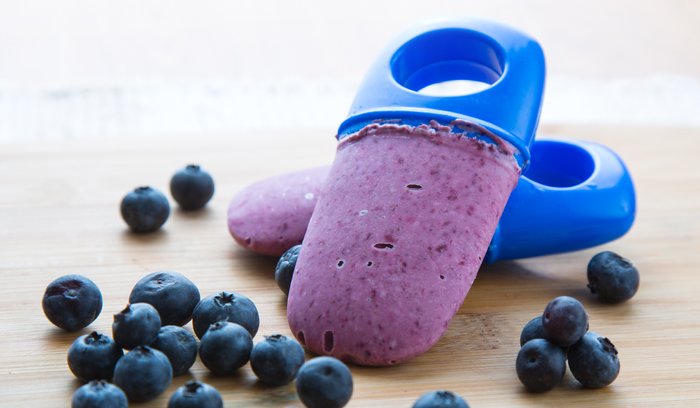
3. Blueberry Cheesecake Pops

After a sweltering summer workout, these pops are just what you need to cool off inside and out, while simultaneously kick-starting the recovery process. The protein-packed trio of cottage cheese, antioxidant-rich blueberries, and almond butter gives you the nutrients your body needs to take the heat.
Blueberry Cheesecake Pops
View Recipe Here

An Underrated Move For Chest

Want a 3D Chest That Pops? Try This Exercise

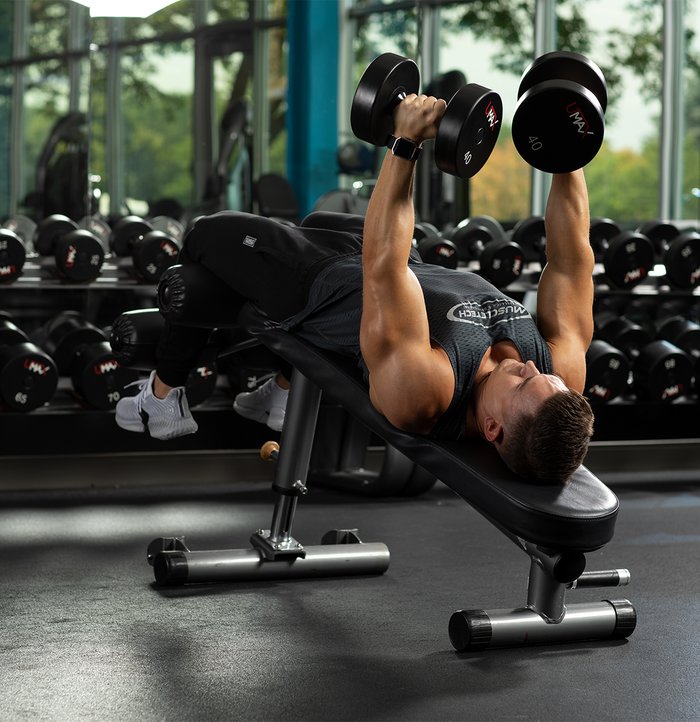
No, it isn't a fancy new movement. It's the decline dumbbell fly. 


Incline movements dominate most chest workouts, and a lot of attention is paid to building the upper chest. Finish up with a few sets on the flat bench and you're good to go, right? Not so fast. You're neglecting one area that is paramount for optimal pec development—the lower pecs.
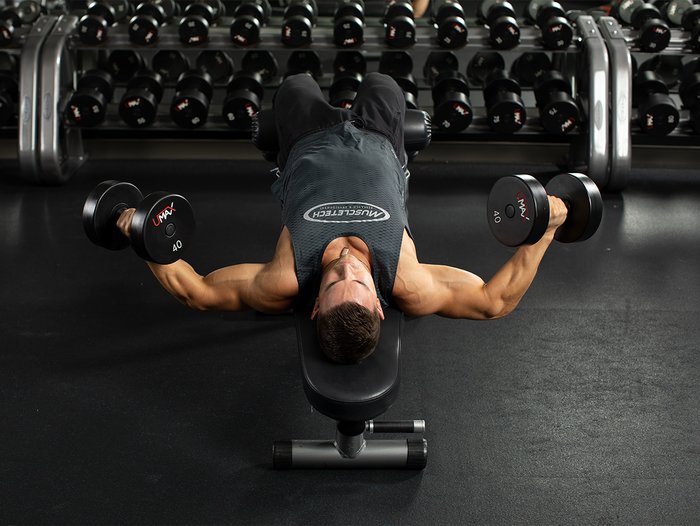
Many lifters out there don't do enough to work their lower pecs. Fortunately, there's an exercise you can do to target this area and improve your entire chest workout when done first: the decline dumbbell fly.

An Underrated Move For Chest

The decline bench isn't as popular as its incline and flat counterparts. You rarely see it used in today's gyms, and those select few who do use it likely only do so because they can move heavier weight.
But if you're more concerned with building your pecs than building your ego, adding decline flyes to your plan will help you build muscle, maximize function, and even improve your chest exercises.
Working the lower pecs can also help you improve the separation of the pecs from the abdomen—a rarely mentioned feature that can make your pecs pop like crazy. If you compete in bodybuilding shows, or if you just want that classic Arnold physique, this separation is essential for success.

Proper Form For Decline

You can check out how to perform this movement at the Bodybuilding.com Exercise Database. Here are a few extra tips to help you get the most out of this exercise for optimal chest growth.
Ideally, the decline bench should allow you to control the angle. A 30-degree decline will serve you best on this exercise, but you can go up to 45 degrees.
Many lifters typically use more weight for pressing at a decline angle, but avoid this practice on your flyes. If you're using 100-pound dumbbells, then you're missing the point. The primary goal of this chest-builder is to stretch the pecs at the bottom of the move and achieve a quality contraction at the top.
Proper Form For Decline
Once you've selected the appropriate weight and gotten into position, try to get as much of a stretch as you can—safely—every time you lower the weights. There's no need to touch the floor, but don't shortchange the range of motion, either. Bonus tip: As you go down to the bottom of the rep, turn your hands so that your pinkies face out. This will help you achieve even more of a stretch in your pecs.
Once you feel that deep stretch you're looking for, it's time to lift the dumbbells back up. As you do, remember to keep the weights over the pecs. It's tempting to lift them up over your head so you can see them, but this recruits the shoulders and takes tension off the pecs. Once the dumbbells are over your chest, turn the dumbbells slightly inward to achieve a little more flex at the top.
Do this exercise at the start of your workout for 3-4 sets of 10-15 reps. This isolation move is a great warm-up to pump blood into the area and pre-exhaust your pecs before the heavier lifting begins.

Most Powerfull

  How to get rid of muscle cramps in your legs     The muscles in your legs are made up of bundles of fibers that alternately contract and ...