Want a 3D Chest That Pops? Try This Exercise
No, it isn't a fancy new movement. It's the decline dumbbell fly.
Incline movements dominate most chest workouts, and a lot of
attention is paid to building the upper chest. Finish up with a few sets
on the flat bench and you're good to go, right? Not so fast. You're
neglecting one area that is paramount for optimal pec development—the
lower pecs.
Many lifters out there don't do enough to work their lower pecs.
Fortunately, there's an exercise you can do to target this area and
improve your entire chest workout when done first: the decline dumbbell
fly.
An Underrated Move For Chest
The decline bench isn't as popular as its incline and flat
counterparts. You rarely see it used in today's gyms, and those select
few who do use it likely only do so because they can move heavier
weight.
But if you're more concerned with
building your pecs
than building your ego, adding decline flyes to your plan will help you
build muscle, maximize function, and even improve your chest exercises.
Working the lower pecs can also help you improve the separation of
the pecs from the abdomen—a rarely mentioned feature that can make your
pecs pop like crazy. If you compete in bodybuilding shows, or if you
just want that
classic Arnold physique, this separation is essential for success.
Proper Form For Decline
You can check out how to perform this movement at the
Bodybuilding.com Exercise Database. Here are a few extra tips to help you get the most out of this exercise for optimal chest growth.
Ideally, the decline bench should allow you to control the angle. A
30-degree decline will serve you best on this exercise, but you can go
up to 45 degrees.
Many lifters typically use more weight for pressing at a decline angle, but avoid this practice on your flyes. If you're using
100-pound dumbbells,
then you're missing the point. The primary goal of this chest-builder
is to stretch the pecs at the bottom of the move and achieve a quality
contraction at the top.
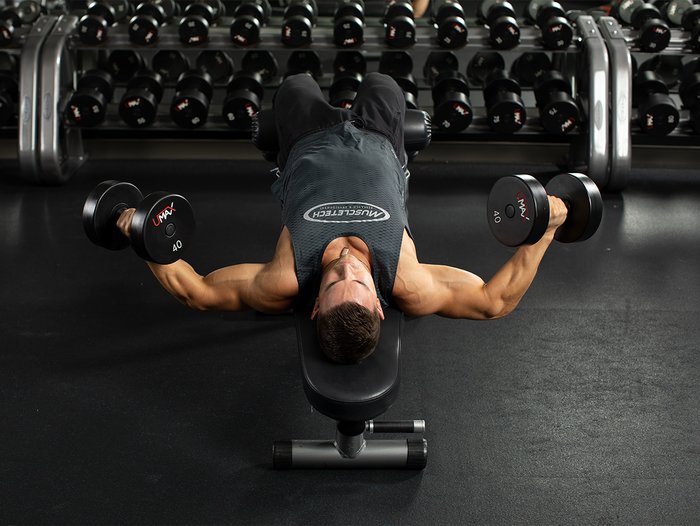
Once you've selected the appropriate weight and gotten into position,
try to get as much of a stretch as you can—safely—every time you lower
the weights. There's no need to touch the floor, but don't shortchange
the range of motion, either. Bonus tip: As you go down to the bottom of
the rep, turn your hands so that your pinkies face out. This will help
you achieve even more of a stretch in your pecs.
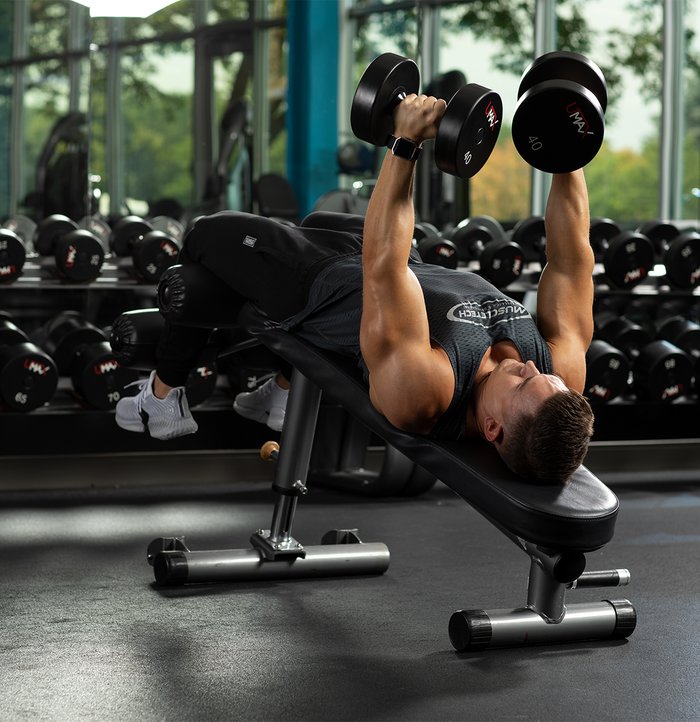
Once you feel that deep stretch you're looking for, it's time to lift
the dumbbells back up. As you do, remember to keep the weights over the
pecs. It's tempting to lift them up over your head so you can see them,
but this recruits the shoulders and
takes tension off the pecs. Once the dumbbells are over your chest, turn the dumbbells slightly inward to achieve a little more flex at the top.
Do this exercise at the start of your workout for 3-4 sets of 10-15
reps. This isolation move is a great warm-up to pump blood into the area
and pre-exhaust your pecs before the heavier lifting begins.